Over the spring and summer I raced a bit and — without ever setting out to — I heat-acclimated. I know because I run with a sweat sensor that logs sweat sodium concentration every few seconds, and sodium is one of the cleaner windows into heat adaptation. Then I spent nine days walking across Lapland in the cold, and a chunk of that adaptation fell away. Now, back in the heat, it's starting to return.
This is the story of that number going down, up, and back down, with an honest look at what it does and doesn't prove.
Why sweat sodium is a heat-adaptation biomarker
When you acclimate to heat, your body learns to hold on to salt. The sweat glands get better at reabsorbing sodium before the sweat reaches your skin (an aldosterone-driven change in the sweat duct) so acclimated athletes produce more dilute sweat. Rough reference points for sweat sodium concentration:
| State | Sweat [Na⁺] | What it feels like |
|---|---|---|
| Unacclimated | ~40–90 mmol/L | a "salty sweater" |
| Acclimated | ~20–40 mmol/L | most trained athletes in season |
| Highly acclimated | under 20 mmol/L | the body hoarding salt |
Track the same person across a season and the direction of their sweat sodium tells you which way their heat adaptation is moving.
Sweat sodium over the season
Lower means more heat-adapted: the body is hoarding salt. Higher means a saltier sweater.
- heat-adapted
- de-adapted, after the cold trek
- early-summer baseline
One honest complication first: duration matters
Before the story, a caveat that took me a while to see in my own data. Sweat sodium isn't a single fixed number for a session — in long efforts it drifts down within the run as the salt-conservation machinery ramps up. My 7.5-hour Andorra race started around 30 mmol/L and settled to 15 by the end; a recent 3-hour run drifted from 29 down to 12. Short sessions don't do this, they hold a stable level.
That means you can't fairly compare a 7-hour race to a 45-minute run on this number: the long one looks "more acclimated" partly just because it was long. So for the season trend I compare duration-matched short sessions, and treat the long-run drift as a separate signal, how strongly my glands conserve salt once they get going. Both are interesting; they're just not the same information.
Note for later: study the salt drift?
The summer: acclimating
Across comparable short sessions, my sweat got more dilute as the summer went on. June training runs sat in the high-20s to low-30s; by my July race (Monte Rosa) I was at 14 mmol/L — genuinely in the "highly acclimated" band. My long races tell the same story from the other direction: Andorra's within-run drift bottomed out at 15. By mid-summer I was about as salt-sparing as I get.
The trek: nine cold days
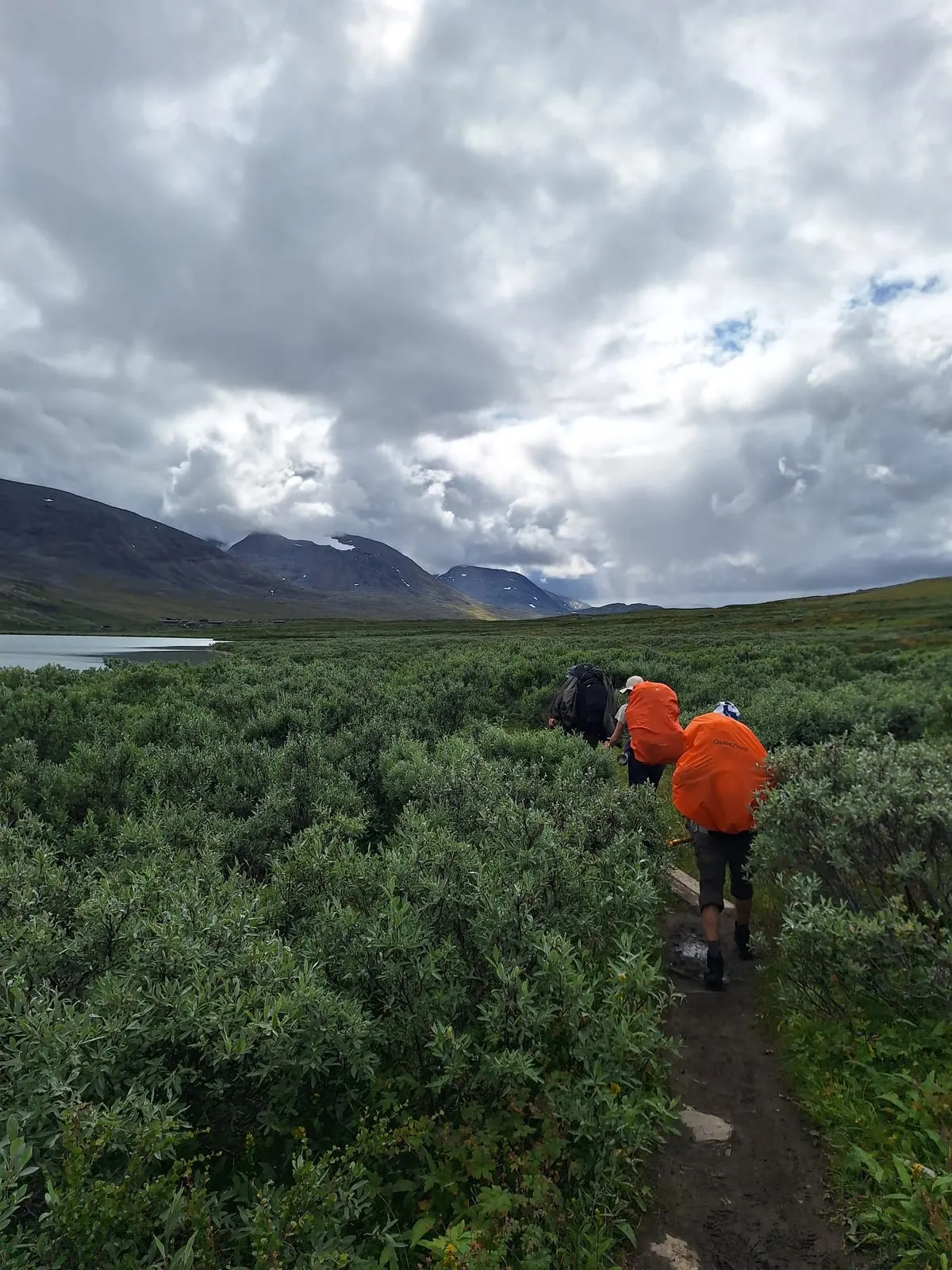
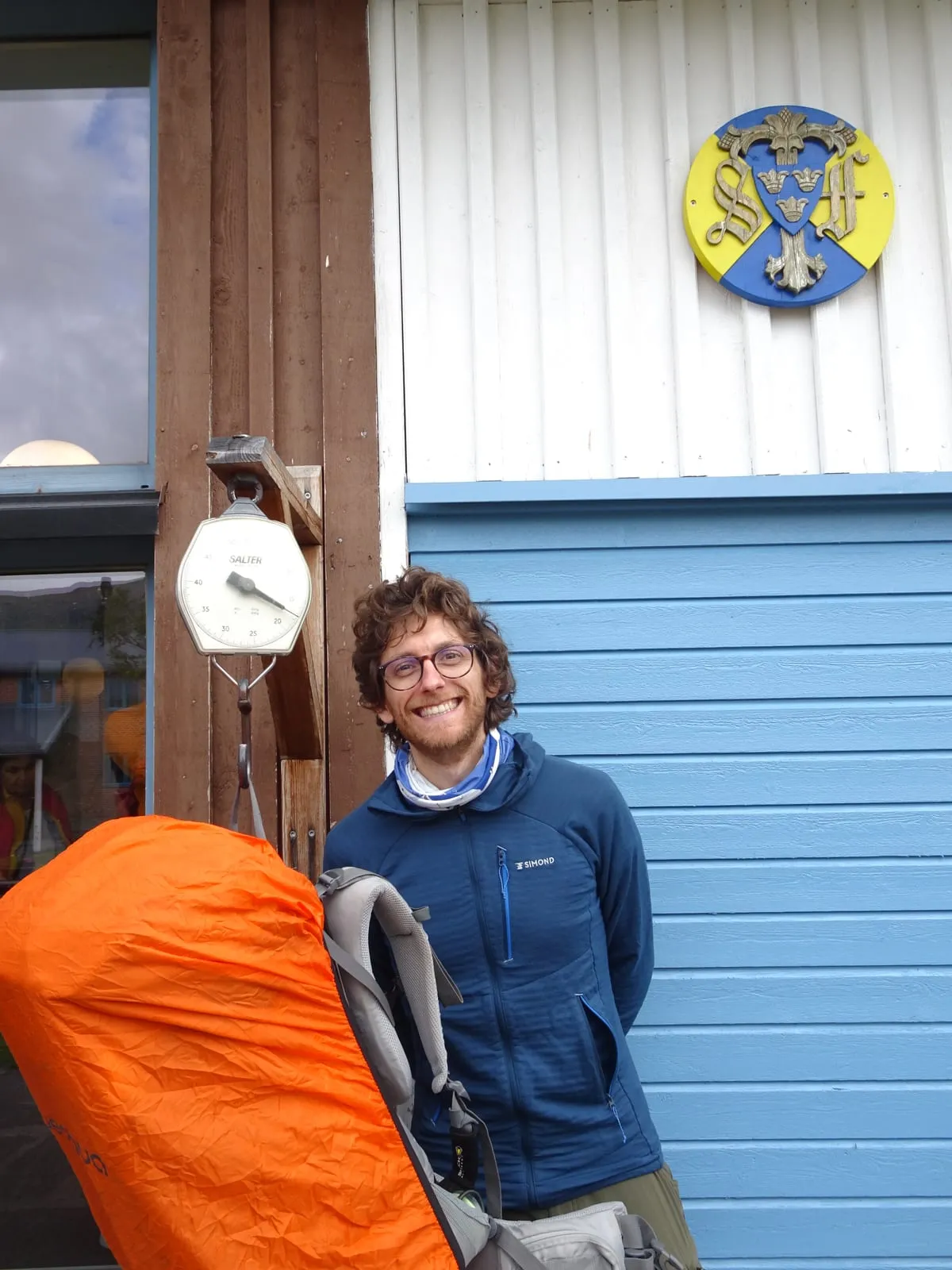
From August 2nd to 10th I walked the Kungsleden, Abisko to Kvikkjokk — roughly 190 km and +5000 m over nine days with a 17kg backpack, in Lapland cold. A big aerobic load, but almost no heat.

A few days later, back in the heat, I did an easy evening run.
The result: it doubled
August 15th, an easy run in 30 °C and 69% humidity, my sweat sodium settled at about 30 mmol/L, more than double the 14 from July, and measured on a session the same length as Monte Rosa, so it's an apples-to-apples jump.
What makes this more than noise is that the two obvious confounds both point the wrong way:
- It was hotter than my July race (30 °C vs 18 °C). Heat should push sodium down.
- I was sweating slowly (~0.6 L/h). Low sweat rates usually mean less salty sweat, not more.
Both said "this should read low," and it read high anyway. The straightforward explanation is the one I expected: nine cold days peeled back my heat acclimation.
Does the science agree? Mostly, with an honest asterisk
Heat adaptations start fading as soon as the heat stops. The go-to reference, a 2018 meta-analysis by Daanen, Racinais and Périard in Sports Medicine, puts the decay at roughly 2.3% per day for the heart-rate adaptation and 2.6% per day for the core-temperature one: the old "lose one day of acclimation for every two days off," roughly.
Sweating is the odd one out. The same analysis found the decay in sweat rate was not related to the number of days off at all, though longer acclimation periods, and hotter ones, produced sweat adaptations that lasted better.
And here is the gap I keep running into: that meta-analysis tracks sweat rate, litres per hour. Mine is sweat sodium, a different variable, and one nobody has published decay curves for. So I am reading my own number against a literature that measured its neighbour.
Here's the conflict: if my acclimated floor was ~14 and an unacclimated baseline is ~40+, jumping to 30 in nine days is giving back something like half the adaptation, closer to 5–6% per day, roughly double the textbook cardiovascular rate, and in a channel where that meta-analysis could not establish a day-count relationship at all. So I don't think it's purely thermal de-acclimation. The likely accomplices: diet (sweat sodium follows dietary salt within days, and trek food is its own variable), cold plus a big load de-adapting faster than the resting-in-a-cool-room studies measure, and the plain fact that it's one data point.
The comeback
This is the part I couldn't write a month ago. Back home in the August heat, I've kept recording, and the number is walking back down: 22 mmol/L on August 21st, 23 on August 24th.
Down from the post-trek 30, heading toward, but not yet back to, July's 14. That's partial re-acclimation in progress, exactly the shape the literature predicts: re-adapting is cheap. Daanen's group found re-acclimation restores heart-rate and core-temperature adaptations 8 to 12 times faster than they decay, and Buono's found sweat sodium starts falling after just two days of heat exposure. But that assumes the heat is consistent, and mine has been scattered.
The most encouraging single sign is a long run on August 23rd: it started around 29 but drifted down to 12 within the three hours, the acute salt-conservation firing hard again. The machinery is back online; the resting set-point is just lagging behind.
What's next
I'll keep feeding the sensor. The falsifiable prediction is simple: if my short-session sodium keeps sliding from the low-20s back toward ~14 over the next couple of weeks of heat, that's re-acclimation doing real, trackable work, and a chest-worn sweat sensor is genuinely reading my adaptation state day to day. If it stalls in the low-20s, then some of the August 15th spike was diet and hydration, not heat, and that's worth knowing too. I hope I won't acclimate much though, since it would mean temperatures not really matching the actual time of the year...
A state I could never see before
Either way, the sensor turned an invisible physiological state, how heat-adapted I am today, into a number I can watch move, in both directions.
Caveats, plainly: a single athlete, single sessions, a consumer sweat sensor and a literature built largely on small samples and short protocols. Treat the percentages as planning tools, not precise predictions. This is my own data, not medical or performance advice.